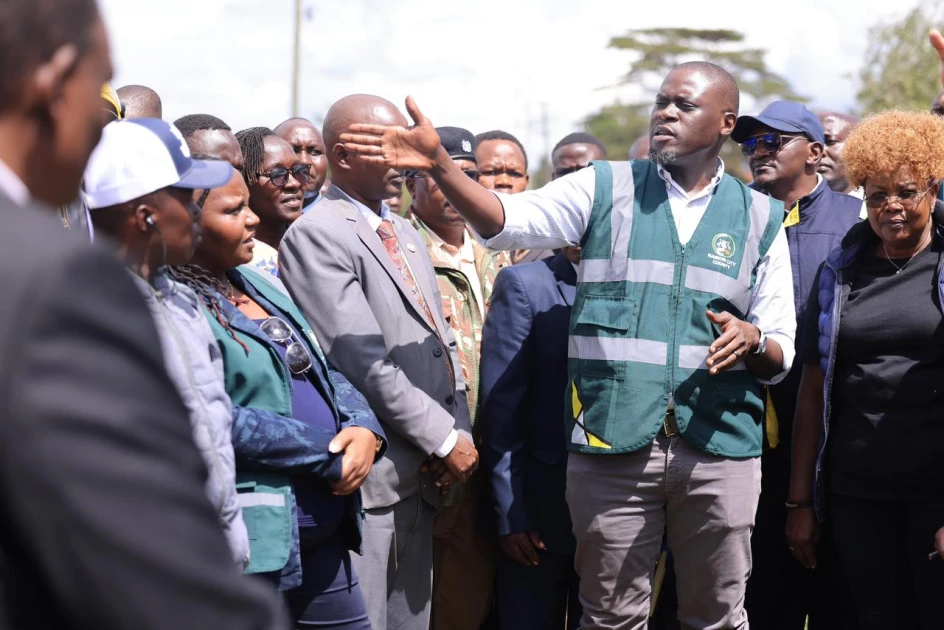
Nairobi Governor Johnson Sakaja has announced immediate rehabilitation works at Nairobi Dam after an inspection revealed serious structural and environmental risks that could endanger surrounding communities.
The assessment, conducted with city and water officials, found weaknesses in the dam’s walls and high levels of pollution, prompting swift action.
Speaking at the site on Monday, Sakaja outlined a three-step emergency plan to stabilise the dam and safeguard residents.
“The first is clearing obstructions downstream of the spillway to allow water to flow naturally and reduce pressure on the dam walls, which have shown signs of breaches. The second is testing the strength of the embankment through geotechnical surveys to ensure structural integrity. The third is enforcing a 30-metre buffer zone around the dam to protect both the public and the infrastructure,” he said.
Constructed in 1953, the dam was designed for recreation and flood control along the Ngong River. Over the years, however, pollution, sewage discharge, encroachment, and informal settlements have reduced its capacity and compromised safety.
To involve the public, authorities will hold forums starting Tuesday in Nairobi West, followed by meetings on Wednesday in Highrise Ward. Residents living near the dam are expected to participate and provide input as works begin.
Sakaja noted that experts had considered decommissioning the dam but concluded that restoration is safer for downstream areas.
“At this stage, we are choosing full rehabilitation. Decommissioning would multiply flood risks for downstream areas,” he said.
He added that preliminary studies by the Water Resources Authority support the decision to restore the dam despite decades of human interference.
“Yes, human interference over decades has caused challenges, but restoration is possible. We are committed to doing this carefully and responsibly,” he said.
The rehabilitation work is set to begin immediately, with short-term interventions starting as early as Tuesday. The project aims to restore the dam’s flood control role and improve safety for surrounding communities.